
Seamless Integrations.
Smarter Operations.

TrakSYS integrates easily with the systems you already rely on—from the shop floor to the boardroom. Whether it’s ERP, SCADA, LIMS, historians, or IoT platforms, our native connectivity and open architecture keep your operations in sync and your data unified.

Connect Across the Stack

TrakSYS is designed to speak the language of manufacturing. With support for modern protocols and legacy systems alike, we help you integrate data from anywhere and make it useful everywhere.
ERP

Sync production and business data for a unified view of planning, costing, 
and inventory. Automated ERP–TrakSYS exchanges cut manual‐entry errors 
and speed decision cycles.

SCADA / HMI

Stream live machine and process data into TrakSYS dashboards for real-time visibility. Spot anomalies faster and ensure smooth handoffs between shifts.

LIMS

Bring lab results and compliance records into your MES instantly. 
Automated sampling workflows tighten quality control and streamline audits.

Historians

Centralize high-resolution time-series data for trend analysis and root-cause investigations. Leverage this dataset to uncover inefficiencies and fuel continuous improvement.
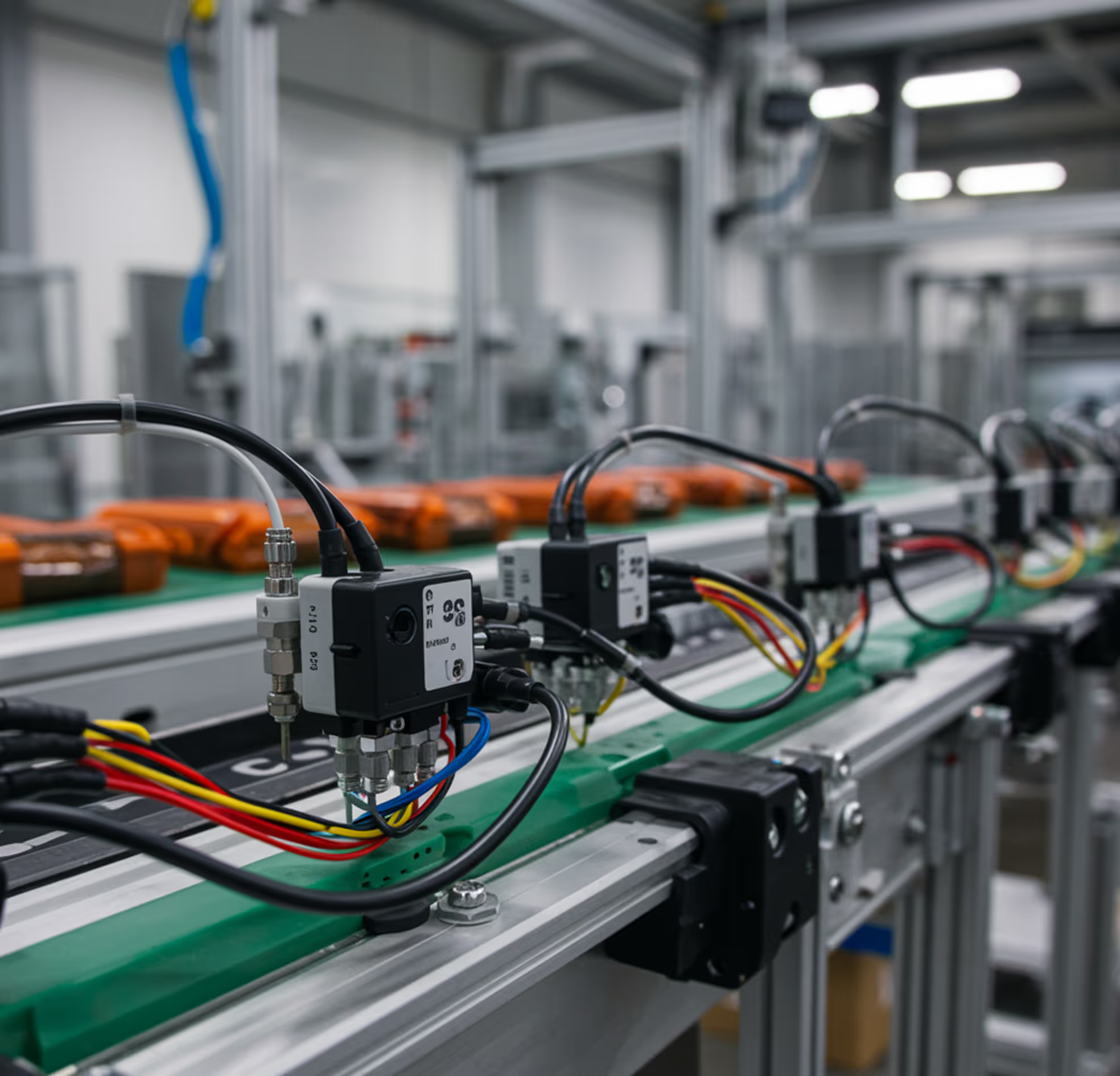
IoT / Edge Devices

Capture granular, device-level metrics at the source. Live sensor data feeds your MES for predictive maintenance and enhanced situational awareness.

Custom File-based (CSV / XML), REST APIs, and More

Use our flexible connectors CSV/XML imports, REST APIs, database 
extracts, or custom formats, to ensure seamless, bi-directional data
flow with any system.

Explore All Integrations

Integrations allow TrakSYS to facilitate efficient data exchange and process automation across various business systems.

Integration Categories
Thank you! Your submission has been received!
Oops! Something went wrong while submitting the form.
Filters
Tag
Core Informatics (Thermo Fisher Cloud)
Laboratory Information Management Systems (LIMS)
Cornerstone OnDemand
Training and Skills Management
Dassault Systèmes ENOVIA
Product Lifecycle Management (PLM)
Delmia by Dassault Systèmes
Manufacturing Scheduling and Planning Tools
Docebo
Training and Skills Management
Dude Solutions (Asset Essentials)
Maintenance Management Systems (CMMS/EAM)
ETQ Reliance
Quality Management Systems (QMS)
Enel X Energy Management
Energy Management Systems (EMS)
Epicor ERP
Enterprise Resource Planning (ERP)
Epicor Prophet 21 WMS
Warehouse Management Systems (WMS)
Falkonry
Machine Learning and Data Analytics Tools
Fishbowl Warehouse
Warehouse Management Systems (WMS)
GE Digital Predix
Industrial Internet of Things (IIoT) Platforms
Greenlight Guru
Quality Management Systems (QMS)
Honeywell EBI (Enterprise Buildings Integrator)
Energy Management Systems (EMS)
IBM Maximo
Maintenance Management Systems (CMMS/EAM)
IFS EAM
Maintenance Management Systems (CMMS/EAM)
Infor CloudSuite
Enterprise Resource Planning (ERP)
No results found.
There are no results with this criteria. Try changing your search.

Low-Code. High Confidence.

Our integration framework is designed for configurability and repeatability—not custom code. Whether you're deploying one site or one hundred, you can stand up interfaces quickly with the governance and control IT demands.

Drag-and-Drop
Interface Definitions

Configurable Mapping and Transformation Logic
Standardized Error Handling and Recovery

Repeatable Templates for Multi-site Use

Integration That Powers Intelligence

The true value of integration isn’t just connectivity—it’s context. By integrating and normalizing your data through TrakSYS, you can drive real-time insights, system-wide coordination, and a new level of visibility across your entire manufacturing ecosystem.
Unified Production View
Region-specific Configurations
Automated Workflows
Real-time Analytics and Alerts

Enterprise-Grade Integration

Feature
TrakSYS Integration Advantage
Security
Encrypted connections, role-based access, and audit logs
Flexibility
REST, OPC UA, MQTT, SQL, file-based ingestion
Speed
Pre-built connectors and low-code configuration
Scale
Template-based deployment across sites and regions